Engineered temporary structures deployed across active data center construction projects, hyperscaler expansion programs, and industrial project environments. Not event tenting. Not commercial canopies. Purpose-built infrastructure for project teams that cannot afford to wait.
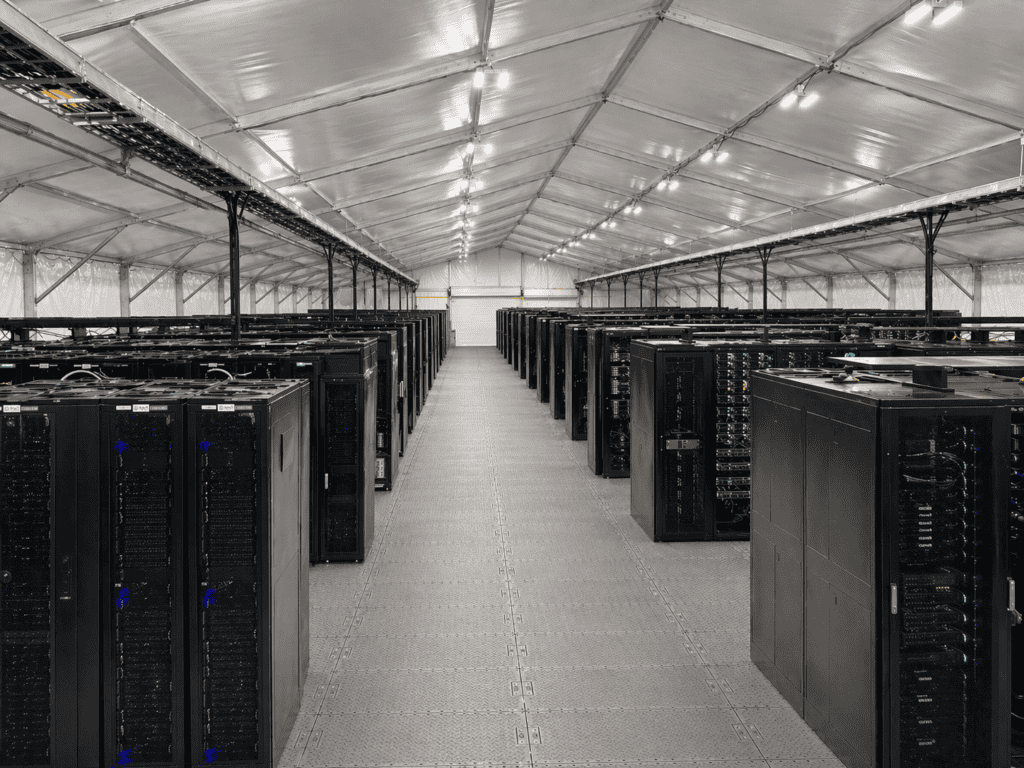
Hyperscalers are expanding. Co-location operators are adding capacity. Enterprise data center teams are under GPU deployment pressure that did not exist 24 months ago. And permanent construction — the permitting, the utility coordination, the structural timelines — is not keeping pace.
When the permanent hall is 12 to 18 months out and demand is live today, project teams need a way to bring capacity online, protect equipment, and keep the site moving without losing control of the schedule.
Temporary data center tents and engineered clear span structures give operators and general contractors a way to hold position while permanent construction catches up.
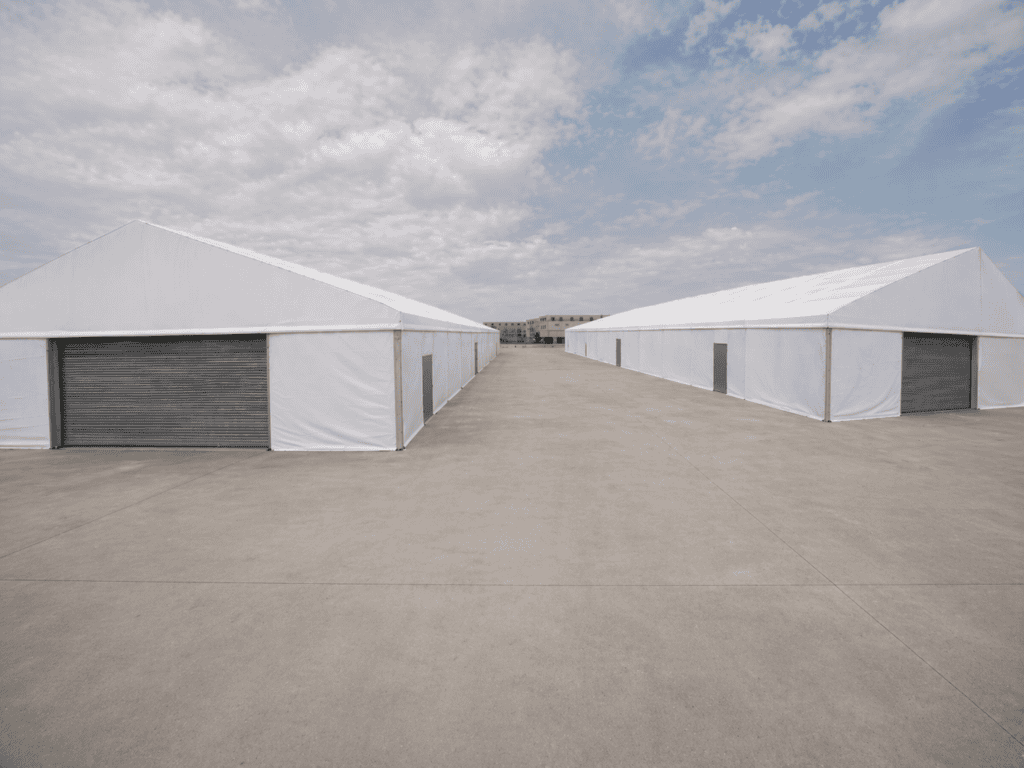
This is industrial-grade temporary infrastructure, not event tenting or commercial canopy work. These are engineered structures designed for controlled project environments where equipment value, site conditions, and schedule pressure are real.
Temporary Data Center Expansion Add enclosed, climate-controlled capacity while permanent facilities are still under construction. Operators use these structures to support project growth without waiting on the full construction cycle.
AI and GPU Infrastructure Overflow Create controlled environments for GPU clusters, AI hardware staging, cooling support infrastructure, and short-term capacity needs during peak demand periods. Thermal management and dust control are not optional for this hardware — these structures are built accordingly.
Modular and Phased Deployment Scale in phases instead of overbuilding too early. Temporary structures allow project teams to match deployment timing to actual demand rather than committing permanent infrastructure to a schedule that may shift.
Edge Data Center Support Stand up location-based infrastructure where permanent construction is not yet justified or where project timelines require immediate deployment near the point of use.
Disaster Recovery and Redundancy Deploy backup space quickly when uptime is at risk, existing infrastructure is compromised, or operators need a temporary protected environment during a disruption event.
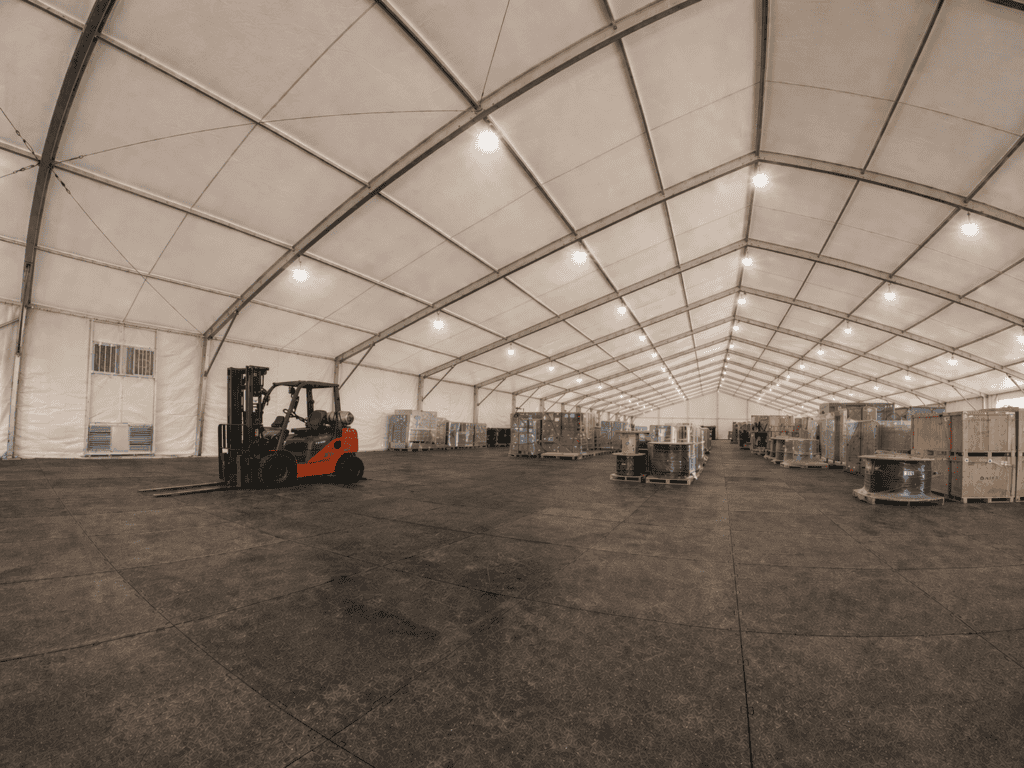
Construction-Phase Site Support Support active data center construction with enclosed space for labor flow, equipment protection, safety meetings, MEP staging, pre-assembly work, and temporary warehousing. The compute building is not the only space that needs to be controlled.
AI and high-performance computing hardware generate serious heat loads. Thermal control is not optional. Dust control is not optional. Environmental stability is not optional. These structures are configured to support sensitive infrastructure with the control that high-value equipment and active project environments require.
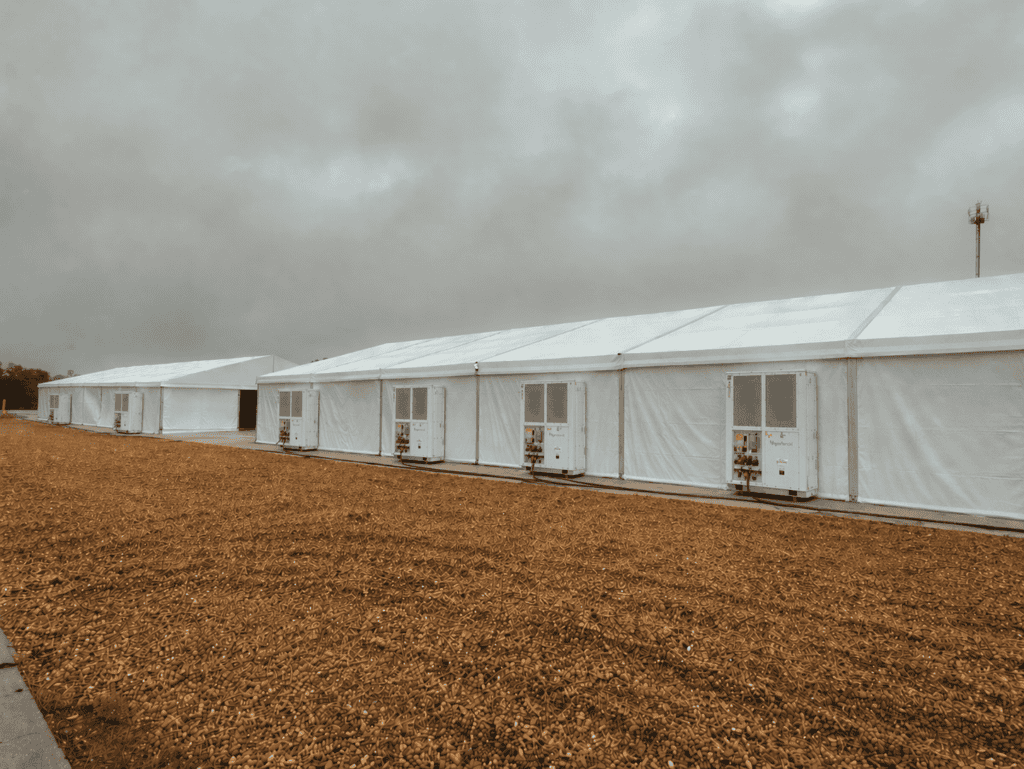
Industrial HVAC Integration Industrial HVAC systems are integrated with wall-penetrating duct layouts that maintain airflow, preserve envelope integrity, and support stable interior conditions — not portable units sitting outside a flap.
Thermal Management Insulated fabric systems, sealed access points, and engineered layouts protect servers, GPUs, switchgear, and related equipment from outside temperature and humidity conditions.
Clear Span Interior No interior columns. Full usable floor area for rack layouts, equipment storage, containment planning, cable routing, and controlled access pathways.
Dust and Weather Protection Enclosed environments that reduce contamination exposure during construction, expansion, and equipment staging — a critical factor on active job sites where concrete cutting, soil disruption, and open-air work are happening nearby.
Power and Fiber Integration Framed openings, sealed penetrations, and custom entry points are incorporated to support power distribution and data cabling while maintaining the building envelope.
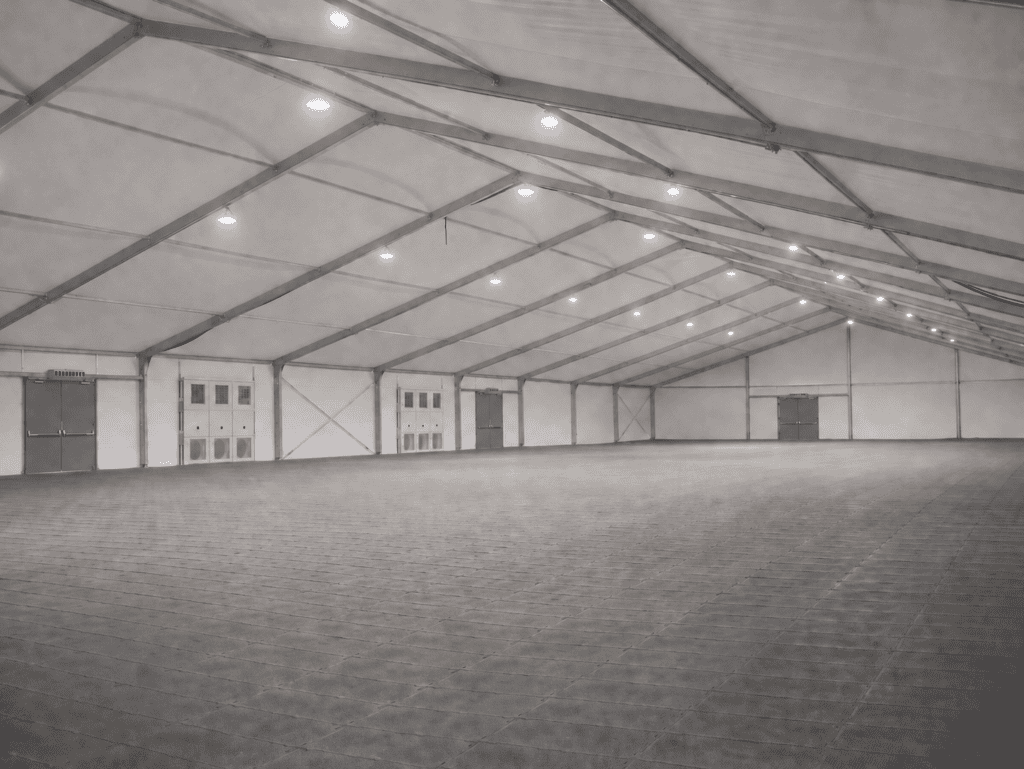
This is the question most buyers ask eventually. The answer matters for site audits, insurance, and credibility with ownership groups.
Event tents are designed for temporary occupancy events — trade shows, weddings, graduation ceremonies. They are not engineered for continuous industrial operation, they are not designed around heat loads or equipment protection, and they are not the structures that GCs and data center operators should be putting sensitive infrastructure inside.
Temporary data center structures from Total Tent Solutions are site-specifically engineered to meet applicable local building code requirements. Stamped engineering drawings are provided to support permitting. Attachment methods are selected based on actual ground conditions. HVAC is integrated, not rolled up outside the door. Access points are controlled. These are temporary structures that perform like buildings — because on a data center project, that is what is required.
A data center project does not just need compute space. It needs support space. GCs, owners, and project teams need protected environments that keep labor productive, equipment secure, and schedules moving across every phase of construction.
Construction Lunch Tents Enclosed break areas and workforce support space for large labor counts during peak build phases.
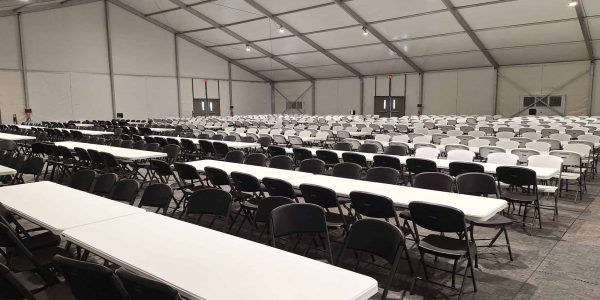
Temporary Warehousing Protect transformers, switchgear, cooling units, cable reels, and high-value project materials before the permanent facility is dried in.
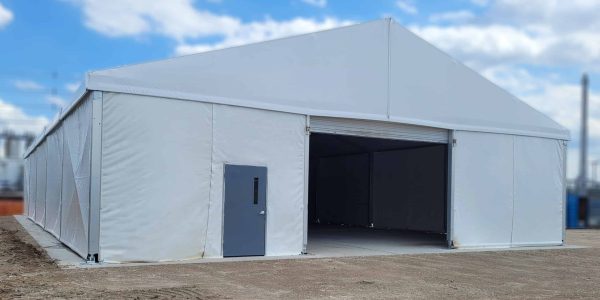
Fabrication Tents Weather-protected space for electrical, MEP, and pre-assembly work that helps compress schedules and reduce site disruption.
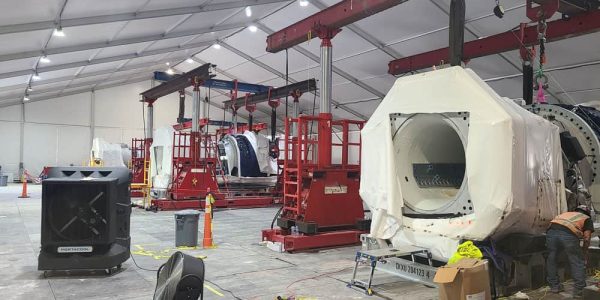
Safety and Coordination Space Enclosed meeting areas for safety briefings, project coordination, planning meetings, and daily field communication.
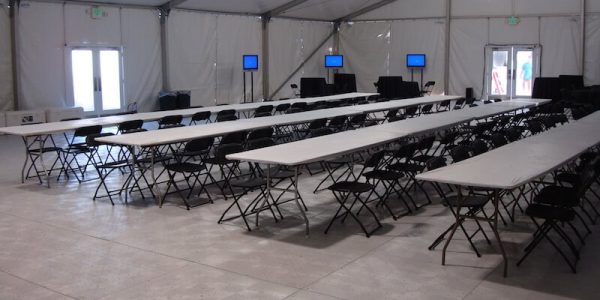
Equipment Pre-Staging Protected, organized, accessible space for sensitive and high-value components until final installation windows open.
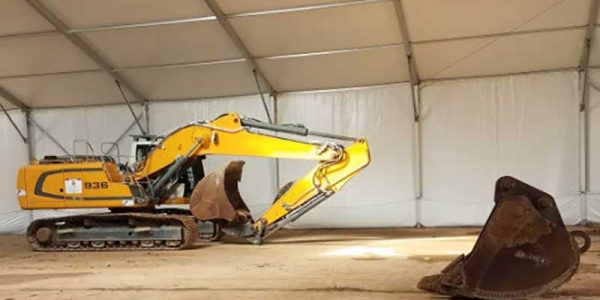
Every site has different ground conditions, access constraints, and utility risks. The surface is evaluated and the attachment method is selected based on deployment requirements — not defaulted to a single approach that may not fit the site.
Concrete Pads Flush-mount concrete anchoring systems provide strong attachment and allow the footprint to be cleared cleanly for future project phases.
Asphalt and Paved Areas Heavy-duty staking and engineered attachment methods for surfaces where conditions and site rules permit secure deployment.
Gravel, Dirt, and Unprepared Ground Attachment method matched to site conditions, with flooring systems available when a more stable and level working surface is required.
Ballasted Installations When penetrative attachment is not permitted, engineered ballast systems provide structural stability on concrete, asphalt, gravel, or other surfaces without penetrating the site. No exceptions required from ownership or ground-condition waivers.
Redeployable Footprints Structures are removed, relocated, or reconfigured as the project moves from one phase to the next.
Data center projects create changing space demands from pre-construction through operations. Temporary structures give project teams a way to respond to those demands without locking into slow permanent timelines too early.
Pre-Construction Staging areas, command space, temporary warehousing, and workforce support before vertical construction ramps up.
Active Construction Labor support, fabrication space, material protection, and site coordination during the heaviest build periods.
Commissioning and Turnover Equipment protection and temporary functional space while the permanent facility completes final-stage work.
Operational Expansion Temporary enclosed capacity and support space when existing facilities are under expansion pressure and permanent construction is on a timeline that does not match current demand.
Recovery and Contingency Redundant space deployment when operations are interrupted or project conditions change faster than the permanent site can absorb.
Industrial and high-control environments require more than fast deployment. Data center project environments specifically require site-specific planning, engineering support, permitting documentation, and execution that fits active commercial and industrial job sites.
Most projects are installed and operational within a few weeks of project initiation, depending on size, site conditions, engineering requirements, and logistics. For operators under schedule pressure, lead time is one of the first questions we answer in the quoting process.
Significantly. Event tents are designed for temporary occupancy events — not for continuous industrial operation, equipment protection, or climate control under real heat loads. These structures are site-specifically engineered to meet applicable local building code requirements, include stamped drawings for permitting, and are configured with integrated HVAC, sealed penetrations, and controlled access.
They are designed for the same category of environment as a permanent building, because that is what a data center project requires.
Yes. Structures are configured with industrial HVAC systems, insulated fabric, sealed openings, and controlled layouts to support heat management and environmental control for active compute hardware.
Yes. Structures are outfitted with controlled access points, hard-wall systems, and other security configurations based on project requirements. Security options are discussed during the pre-qualification phase.
Yes. Structures are site-specifically engineered to meet applicable local building code requirements. Stamped engineering drawings are provided to support permitting.
Yes. When penetrative attachment methods are not permitted, engineered ballast systems provide structural stability without penetrating the site surface.
Yes. Framed openings, sealed penetrations, and custom entry points support power distribution and data cabling while maintaining the building envelope.
Yes. The modular design allows structures to be extended, reconfigured, or redeployed as project scope evolves.
General contractors managing active construction sites, data center operators who need temporary compute capacity while permanent halls are under development, hyperscaler and co-location project teams managing phased expansion, and enterprise infrastructure teams managing AI workload demand that has outpaced permanent capacity.



































Lorem ipsum dolor sit amet, consectetur adipiscing elit. Ut elit tellus, luctus nec ullamcorper mattis, pulvinar dapibus leo.
We use cookies to improve your experience on our site. By using our site, you consent to cookies.
Manage your cookie preferences below:
Essential cookies enable basic functions and are necessary for the proper function of the website.