The Myth of “It’s Only a Tent”
If you have spent any time on an active jobsite, you know that small decisions can sometimes create surprisingly large problems. Something that feels simple in the planning stage can ripple through an entire project once boots hit the ground and crews start moving.
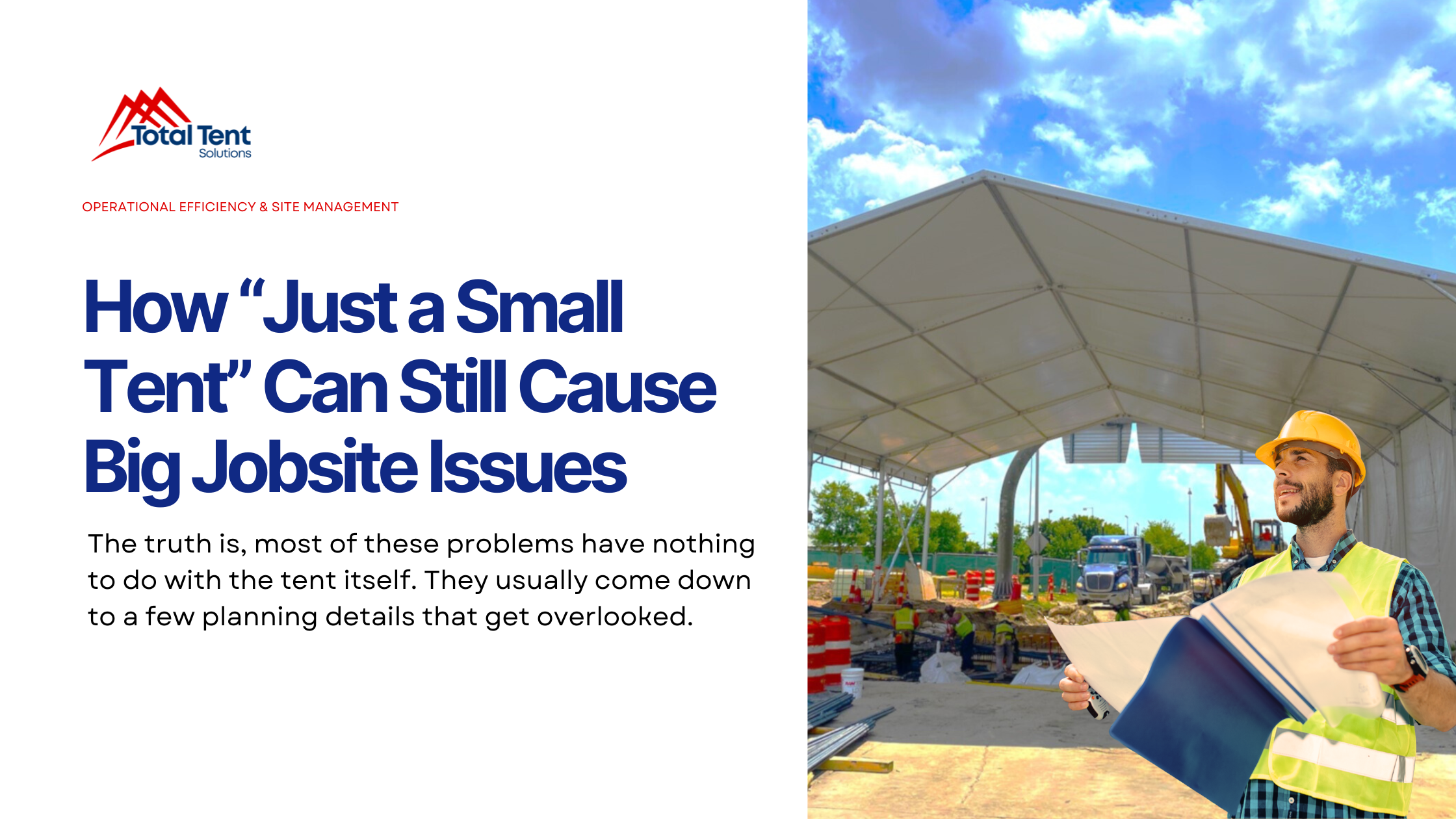
Clear span tents are a perfect example of this. Someone suggests adding a tent to give crews a place to eat lunch, store tools, or stay out of the weather. The tent is not huge, maybe 33×50 or 40×66. Compared to everything else happening on the jobsite, it seems insignificant.
So the thinking becomes simple. “It is just a tent.”
But jobsites rarely operate in simple terms. They operate like ecosystems where people, equipment, safety protocols, and schedules all interact at the same time. When you introduce something new into that system, even something that looks small on paper, it can shift how everything else functions.
Think about it like rearranging furniture in a busy kitchen. A new table might seem harmless, but if it blocks the path between the stove and the prep area, suddenly everyone is bumping into each other. The table itself is not the issue. The placement is.
The same thing happens with tents on industrial jobsites. A tent may seem like a minor addition, but without the right planning it can affect workflow, safety, and productivity in ways nobody expected.
That is why even a small clear span tent deserves thoughtful planning. Not because tents are complicated, but because the jobsite around them is.
What Counts as a “Small” Clear Span Tent on a Jobsite
When people talk about a “small tent,” they are usually referring to the square footage. Compared to massive industrial structures or equipment staging areas, a 33×50 tent feels modest.
However, on a jobsite the actual impact of a tent goes far beyond its physical footprint.
A tent affects more than the ground it sits on. It also influences the surrounding space needed for safe operation and access. Once you consider the full picture, the operational footprint of a tent becomes much larger than the dimensions written on a quote sheet.
For example, a tent requires space for anchoring systems, ballast blocks, or stakes depending on the surface conditions. Crews need clear access points to enter and exit safely. Equipment such as forklifts or pallet jacks may need room to maneuver near the structure. Lighting, utilities, and ventilation may also require additional setup space.
Suddenly the tent that looked small in theory is interacting with a much larger portion of the jobsite.
Another factor is how quickly temporary structures become essential infrastructure. A lunch tent may start as a convenience, but within days it becomes the central gathering point for crews. A tool storage tent may become the main staging area for equipment that teams rely on throughout the day.
When that happens, the tent is no longer just a temporary shelter. It becomes part of the operational workflow of the project. And anything that affects workflow deserves careful planning.
The Top 3 Jobsite Issues Small Clear Span Tents Can Cause
From years of jobsite experience, three issues tend to show up repeatedly when small tents are installed without proper planning.
- Site flow disruptions and access bottlenecks
- Safety and compliance gaps
- Scope creep involving power, flooring, and climate control
Each of these problems starts small. But when they are left unaddressed, they can grow into frustrations that impact the entire project.
Issue #1: Site Flow Breakdowns and Access Chokepoints
The first and most common issue is how a tent changes movement across the site.
Every jobsite develops a natural flow over time. People walk certain paths. Forklifts follow predictable routes. Materials arrive at staging areas that crews rely on. When you place a structure into that environment, you have to think carefully about how it will affect that flow.
Even a relatively small tent can create unexpected congestion if it sits in the wrong location.
Imagine a lunch tent placed near a frequently used equipment route. At first the setup might seem fine. But once crews begin using the tent and equipment operators continue their normal routes, those two activities start competing for the same space.
Suddenly forklifts are slowing down, workers are stepping aside, and deliveries take longer to maneuver into position. What looked like a simple shelter has quietly become a choke point.
The same issue can happen with material staging and crane operations. Laydown areas are often carefully planned to keep materials accessible and organized. If a tent occupies space that used to serve that purpose, the entire material flow pattern may have to adjust.
Emergency access is another important consideration. Jobsite layouts must maintain clear paths for fire lanes and emergency vehicles. A poorly placed tent can unintentionally narrow those routes or force responders to navigate obstacles during a critical situation.
None of these problems occur because the tent itself is large. They occur because the tent interacts with the flow of the site in ways that were not considered during planning.
Issue #2: Safety and Compliance Gaps
The second major issue involves safety. This is where small tents can become surprisingly risky when they are treated too casually.
Unlike pop up canopies used at backyard events, clear span tents on jobsites are real structures that must withstand environmental conditions and meet safety expectations.
Wind load is one of the biggest factors. Even moderate wind can place significant stress on tent frames and fabric if anchoring is inadequate. Anchors, stakes, or ballast must be selected based on the actual ground conditions and expected weather patterns.
Surface conditions also matter. Anchoring into soil is different from anchoring into asphalt or concrete. Underground utilities must be identified before any stakes or anchors are driven into the ground. When this step is skipped or rushed, it can create both safety and infrastructure risks.
Another common oversight involves basic safety elements inside the tent itself. Once people start using the space regularly, the tent effectively becomes a small building environment. That means crews need safe entry and exit points, adequate lighting, and clear walking paths.
Poor lighting can lead to trip hazards. Muddy or uneven ground can create slipping risks. Equipment stored inside the tent can block exits if space is not organized properly.
If the tent is located near fabrication or welding work, additional precautions may be necessary to manage sparks, heat, and ventilation.
When tents are installed thoughtfully, these issues are easy to prevent. But when installation is rushed under the assumption that the structure is “just temporary,” safety gaps can appear quickly.
Issue #3: Scope Creep with Utilities and Comfort
The third issue often shows up gradually as crews begin using the tent day after day.
At first the goal may simply be to provide shelter from sun or rain. But once the tent becomes part of daily operations, additional needs naturally emerge.
For example, crews working inside the tent may ask for lighting so they can see clearly during early morning hours. Tools may need outlets for charging batteries. Fans or heaters may be requested to make the environment more comfortable during extreme temperatures.
If the ground inside the tent becomes muddy, someone may suggest adding flooring or mats. If wind starts blowing rain sideways into the tent, sidewalls may become necessary.
None of these upgrades are unreasonable. In fact, they often improve productivity and morale. The challenge arises when these needs were not anticipated in the original plan.
A tent that began as a simple shelter can gradually require power distribution, climate control equipment, and additional installation work. That process is often referred to as scope creep, and it can increase both cost and setup complexity.
The key lesson is that tents used for daily operations should be planned more like temporary workspaces rather than simple coverings.
Why Planning Matters More Than Tent Size
When people experience problems with jobsite tents, the immediate reaction is often to blame the structure itself.
In reality, most of the issues described above are not caused by the tent. They are caused by planning blind spots.
A well planned tent installation considers how the structure fits into the broader jobsite environment. That means thinking about crew movement, equipment access, weather exposure, and operational needs before installation begins.
Rushing through that process can lead to the common phrase heard on many sites: “We will figure it out once it is up.”
Unfortunately, that approach often leads to adjustments that are more complicated than simply planning correctly from the start.
The difference between a smooth installation and a frustrating one usually comes down to preparation.
A Simple Planning Checklist That Prevents Problems
Before installing even a small tent on a jobsite, it helps to walk through a few key questions.
First, clarify exactly how the tent will be used. Is it primarily a break area, a storage space, or a staging location for equipment? Defining the use case early prevents confusion later.
Next, evaluate the surrounding site flow. Observe how crews and equipment move through the area during a typical workday. A location that looks empty during a quiet moment may actually be part of a busy traffic route during peak activity.
Anchoring requirements should also be reviewed in advance. Surface conditions, wind exposure, and underground utilities all influence how the structure should be secured.
Utilities deserve consideration as well. Even if the tent initially requires no power, it is wise to anticipate whether lighting, fans, or heaters might be needed later. Planning those connections early avoids messy workarounds.
Finally, consider the ground surface itself. Muddy or uneven ground can quickly turn a useful tent into an unpleasant place to work. Preparing the surface or adding flooring can dramatically improve usability.
Different Tent Uses Come with Different Risks
Not every tent serves the same purpose on a jobsite, and the intended use often determines what risks need the most attention.
Break tents and lunch tents focus primarily on comfort and safe crowd flow. Adequate seating space, clear entry points, and ventilation are key considerations.
Tool storage tents must prioritize organization and protection from weather. Easy access for carts or forklifts can make a significant difference in daily efficiency.
Fabrication or welding shelters introduce additional safety requirements related to heat, sparks, and ventilation. These environments should be evaluated carefully to ensure proper separation from combustible materials.
Maintenance shutdown projects often use tents as staging hubs where multiple crews gather equipment and coordinate tasks. In these cases, the tent can become a central operational point that must remain easily accessible.
Each use case changes how the tent interacts with the jobsite environment. Recognizing those differences during planning helps avoid unexpected challenges later.
How Proper Planning Keeps the Job Moving
When a tent installation is done correctly, something interesting happens. People stop thinking about the tent altogether.
Crews move through the space naturally. Equipment operators do not have to reroute around obstacles. Lighting works, the ground stays manageable, and the structure feels stable even during changing weather conditions.
In other words, the tent quietly supports the work instead of competing with it.
The best jobsite infrastructure often goes unnoticed because it blends seamlessly into daily operations. That is the real goal of good planning.
Conclusion
At first glance, a small clear span tent may seem like one of the simplest additions to a jobsite. But as many project managers and site supervisors eventually discover, even a modest structure can influence workflow, safety, and productivity in meaningful ways.
The size of the tent is rarely the true issue. The real challenge lies in how the tent interacts with the surrounding environment. When placement, anchoring, utilities, and site flow are considered ahead of time, a small tent becomes exactly what it should be: a helpful support structure that keeps crews comfortable and operations running smoothly.
A little planning goes a long way. By thinking through how the tent will function within the larger jobsite system, teams can avoid unnecessary disruptions and ensure that even the smallest structures contribute positively to the project.
FAQs
- Why can a small clear span tent cause jobsite issues?
Because tents affect more than their physical footprint. They influence traffic flow, safety requirements, and operational logistics across the surrounding area. - What is the most common mistake when installing a jobsite tent?
Placing the tent without evaluating how it will affect equipment routes, material staging, or emergency access paths. - Do small tents still require professional anchoring planning?
Yes. Wind loads and ground conditions apply to all tents, regardless of size. Proper anchoring ensures stability and safety. - How can project managers prevent scope creep with tent setups?
By anticipating potential needs such as lighting, power, flooring, and climate control before installation begins. - When should a tent be treated as critical jobsite infrastructure?
Any time crews rely on the tent daily for operations such as staging equipment, storing tools, or providing shelter for workers.