
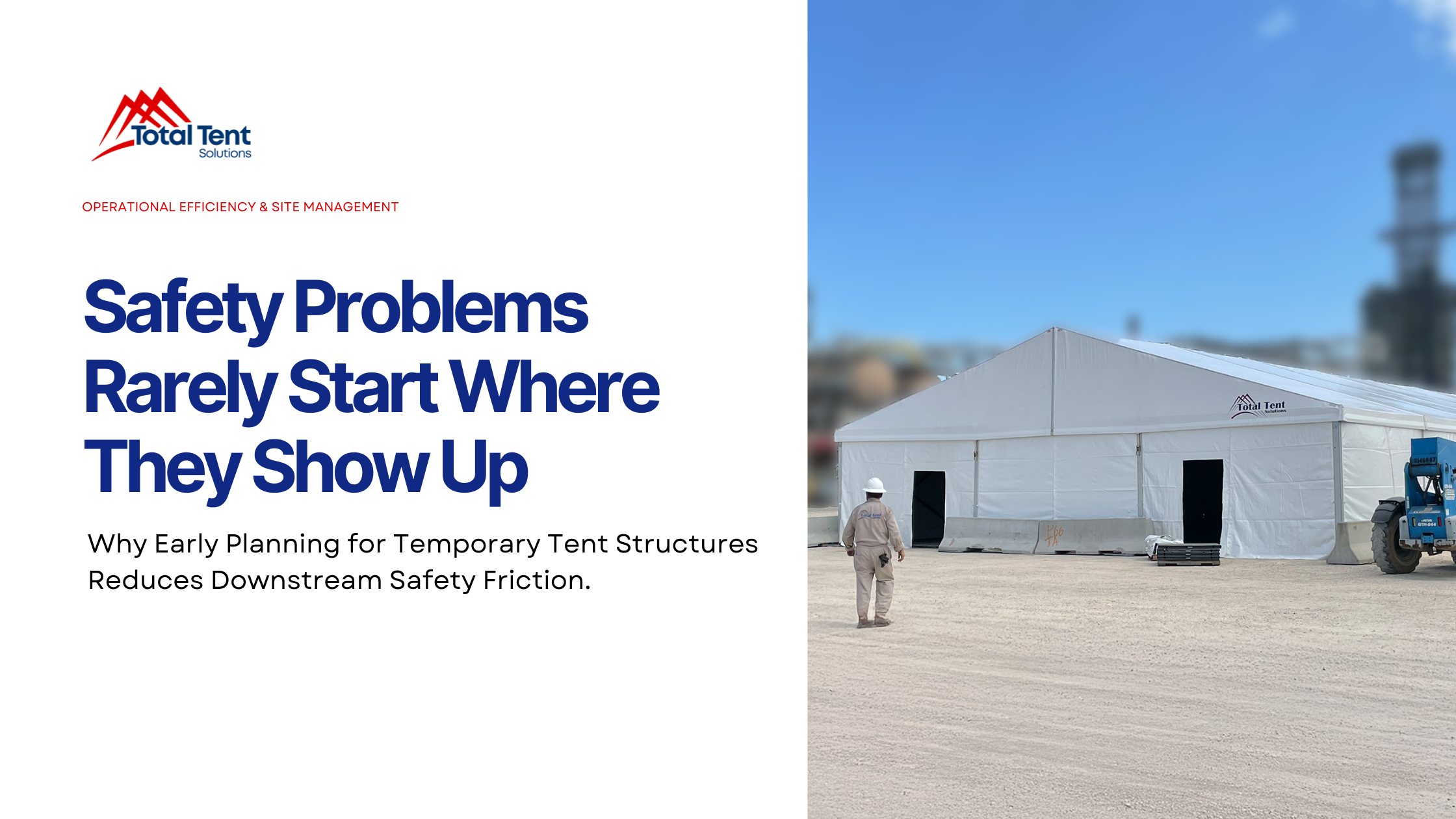
Why Early Planning for Temporary Tent Structures Reduces Downstream Safety Friction
Safety Problems Rarely Start Where They Show Up
In industrial and manufacturing turnarounds, safety incidents almost never come out of nowhere. They are usually the final link in a chain of small, overlooked decisions made weeks or even months earlier. A rushed layout change. A temporary shelter added late. A climate control plan that assumed ideal conditions instead of real ones.
Temporary tent structures often sit right in the middle of that chain. When planned early, they support safety quietly and consistently. When planned late, they become one more variable crews have to work around. The difference is not the tent itself. It is when and how it was integrated into the project.
Early planning reduces safety friction by removing obstacles before crews ever step on site.
What “Safety Friction” Really Looks Like on Industrial Turnaround Sites
Safety friction is not always obvious. It does not show up as a violation report or a lost-time incident right away. It shows up as hesitation, shortcuts, congestion, and fatigue.
During turnarounds , timelines are compressed, multiple trades are stacked, and friction compounds fast. Anything that slows movement, complicates access, or adds discomfort becomes a pressure point.
The Difference Between Safety Rules and Safety Reality
Most industrial sites have solid safety programs on paper. The challenge is translating those rules into real-world conditions that make compliance the path of least resistance.
If a tent entrance is poorly placed, crews will avoid it. If staging areas are cramped, materials end up where they should not be. If rest or break areas are uncomfortable, people push through longer than they should. Early tent planning helps align safety expectations with how people actually work.
How Temporary Structures Become Unintentional Risk Multipliers
When tents are dropped into a site late, they often disrupt existing flows. Walkways narrow. Equipment routes intersect with foot traffic. Emergency egress paths become less obvious.
None of this is intentional, but intent does not matter when the result is increased exposure. Early planning prevents temporary structures from multiplying risk instead of reducing it.
Why Temporary Tent Structures Are Often Planned Too Late
In turnaround environments, temporary structures are sometimes viewed as flexible or secondary. That mindset is understandable, but it is also where problems begin.
The “We’ll Figure It Out Later” Trap
Turnaround schedules move fast. When planning teams defer tent decisions, they assume flexibility will save time later. In reality, late decisions force compromises.
By the time tents are addressed, space is limited, utilities are spoken for, and workflows are already established. The tent has to adapt to the site instead of the site benefiting from the tent.
Schedule Pressure and Reactive Decision Making
Late planning pushes teams into reaction mode. Install locations are chosen based on availability, not suitability. HVAC is sized quickly. Anchoring plans are adjusted in the field.
Reactive decisions increase the chance of safety gaps, rework, and unnecessary exposure.
Early Planning as a Risk Reduction Strategy
Early tent planning is one of the simplest ways to remove risk before it shows up on a safety dashboard.
Planning Tents Like Critical Infrastructure, Not Accessories
In industrial turnarounds, temporary tents often serve as workspaces, break areas, tool storage, or controlled environments. That makes them operational infrastructure, not accessories.
When they are treated with the same seriousness as power, access, and logistics, they start contributing to safety instead of competing with it.
Comparing Tent Planning to Utility and Access Planning
No one waits until mobilization to decide where electrical tie-ins or emergency routes will go. Temporary structures deserve that same level of foresight because they directly influence both.
Site Layout Decisions That Prevent Safety Bottlenecks
Layout decisions made early ripple through the entire project.
Traffic Flow, Egress, and Equipment Movement
Early planning allows tents to be positioned without creating choke points. Equipment can move without crossing pedestrian paths. Emergency access remains clear and intuitive.
On busy turnaround sites, even small layout improvements reduce near misses and stress.
Separation of People, Vehicles, and Materials
Intentional placement helps maintain separation between foot traffic, forklifts, and staging zones. That separation is one of the most effective safety controls available, and it starts with layout, not signage.
Environmental Controls and Their Impact on Worker Safety
Environmental conditions directly affect decision-making and physical performance.
Ground Conditions, Loads, and Flooring.
Uneven surfaces, water pooling, tripping hazards, and equipment load requirements all affect how tented spaces perform. When reviewed early, proper flooring can mitigate these issues by improving stability, moisture management, and load distribution.
Heat Stress, Cold Exposure, and Weather Fatigue
Turnarounds do not pause for weather. Crews work through heat, cold, wind, and rain. Without proper shelter, fatigue sets in faster and attention slips.
Tents planned early can be designed to mitigate exposure instead of just blocking precipitation.
Climate Control as a Safety Tool, Not a Comfort Upgrade
Climate control is often discussed as a comfort feature, but in reality, it protects focus, endurance, and reaction time. Early planning ensures HVAC systems are sized correctly, powered reliably, and integrated without shortcuts.
Early Engineering Review Reduces Field Modifications
Engineering decisions benefit from time and clarity.
Load Ratings, Anchoring, and Wind Planning
When tents are reviewed early, load requirements and anchoring strategies can be matched to site conditions. Wind exposure, ground conditions, and structural needs are addressed before crews arrive.
Why Last-Minute Adjustments Create Risk
Late adjustments often happen under pressure. Improvised solutions reduce safety margins and increase dependency on workarounds. Early engineering eliminates the need for those compromises.
Credentialed Install Crews and Safety Alignment
Who installs the structure matters as much as the structure itself.
The Cost of Unqualified Installations
Uncredentialed or unfamiliar crews may unintentionally violate site requirements. Correcting those issues later introduces delays, rework, and risk.
Why Early Scheduling Improves Crew Compliance
Early planning allows experienced, properly credentialed install crews to be scheduled intentionally. That alignment reduces friction with site safety teams and streamlines approvals.
Reducing Safety Meetings, Workarounds, and Exceptions
Complex sites already have enough rules.
How Clear Planning Simplifies Safety Briefings
When tents are integrated cleanly into the site plan, safety briefings stay focused. Fewer exceptions mean fewer reminders, fewer clarifications, and less confusion.
Temporary Structures and Regulatory Inspections
Inspections reward preparation.
Avoiding Inspection Delays and Corrective Actions
Early planning ensures temporary structures meet codes, site rules, and documentation requirements from day one. That prevents inspection delays and corrective actions that disrupt momentum.
How Early Tent Planning Improves Worker Behavior
People respond to their environment more than they respond to instructions.
Predictability Builds Safer Habits
When entrances, exits, and workflows are consistent, crews develop habits that reinforce safety. Predictability reduces mental load and error rates.
Communication Gains from Early Tent Integration
Early planning creates alignment across teams.
Aligning Safety, Operations, and Contractors
When tents are discussed early, safety teams, operations, and contractors share the same expectations. That alignment prevents last-minute conflicts and finger-pointing.
Cost Control as a Secondary Safety Benefit
Safety and cost control often move together.
Fewer Change Orders, Fewer Risks
Change orders disrupt rhythm. Disruption increases risk. Early planning minimizes both while keeping projects on track.
Real-World Turnaround Comparison: Early vs Late Planning
On early-planned sites, tents support operations quietly. Crews move efficiently. Safety conversations stay proactive.
On late-planned sites, tents become discussion points, obstacles, and sources of adjustment. The structure did not change. The timing did.
Why Early Planning Creates Psychological Safety on Site
When crews see thoughtful planning, confidence increases. People speak up earlier. Small issues are addressed before they grow. Psychological safety improves because the environment signals competence and care.
Making Early Tent Planning Part of Your Turnaround Safety Culture
Organizations that plan temporary structures early send a clear message. Safety is not reactive. It is built into the work. Over time, that mindset spreads beyond tents into every operational decision.
The Best Safety Fixes Happen Before the Problem Exists
In industrial and manufacturing turnarounds, the safest projects are rarely the ones with the most rules. They are the ones where risk was removed before crews arrived.
Early planning for temporary tent structures reduces safety friction by supporting how people actually work. When tents are integrated early, they protect crews quietly, consistently, and effectively.
That is not just good planning. That is good operations.
FAQs
1. When should temporary tent planning start on a turnaround project?
Ideally during initial site logistics and safety planning, alongside access, utilities, and traffic flow discussions.
2. Are temporary tents really that impactful on safety outcomes?
Yes. They influence movement, environment, fatigue, and behavior more than most teams expect.
3. Is early planning worth it for short-duration turnarounds?
Absolutely. Compressed schedules make early decisions even more critical.
4. How does early planning reduce safety meetings later?
Clear layouts and fewer exceptions reduce the need for repeated explanations and workarounds.
5. What is the biggest safety risk of late tent planning?
Unintentional congestion and environmental exposure that encourage unsafe shortcuts.