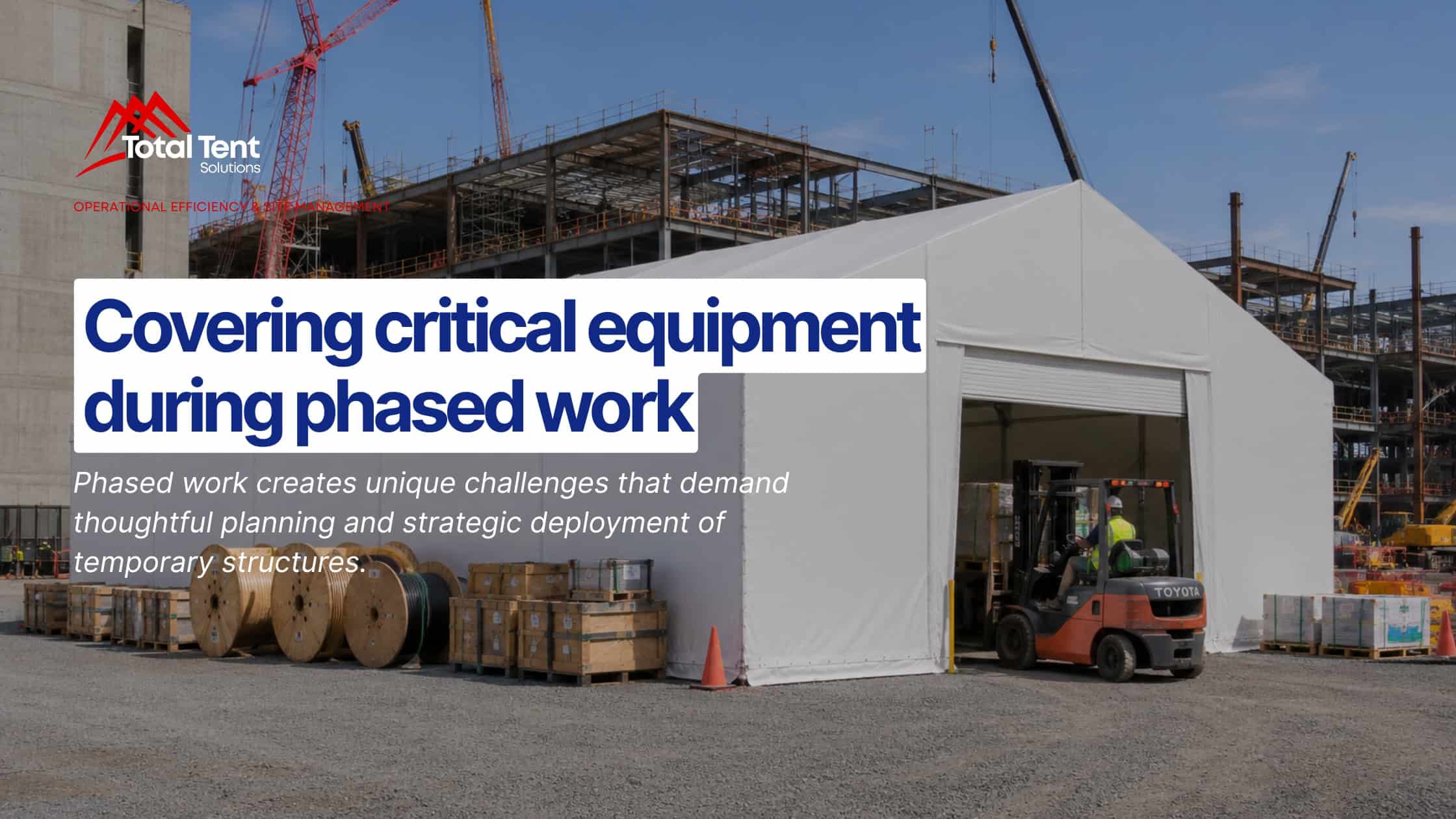
When you’re operating in a refinery, petrochemical facility, or managing a major turnaround maintenance project, protecting your critical equipment while work progresses through multiple phases isn’t just about following guidelines. It’s about ensuring your assets remain functional, your operations stay on schedule, and your workforce operates safely in a properly controlled environment. The reality is that phased work creates unique challenges that demand thoughtful planning and strategic deployment of industrial enclosures to maintain equipment integrity throughout the project lifecycle.
Understanding Industrial Enclosure Requirements for Turnaround Maintenance
Turnaround maintenance in industrial settings represents one of the most critical operational windows throughout the year. During these intensive periods, your facility undergoes comprehensive inspections, repairs, and upgrades that can impact every major system. This is where industrial enclosures become invaluable. Unlike traditional approaches that might leave equipment exposed to the elements, weathering, dust contamination, or accidental damage, a properly designed enclosure keeps your assets protected while allowing skilled workforce support teams to execute their responsibilities efficiently.
The fundamental difference between a temporary structure and a true industrial enclosure lies in engineering rigor. A clear span structure engineered to code doesn’t just provide coverage. It delivers climate control, dust mitigation, and secure access points that are specifically designed to accommodate the needs of plant-ready crews operating under TWIC or HASC certification requirements. Your equipment isn’t just sitting under a roof during phased work. It’s in an operational support structure that recognizes the unique demands of refinery and petrochemical environments.
Why Equipment Protection Matters During Phased Operations
Consider what happens to exposed equipment over several months of intensive work. Rain brings rust and corrosion. Temperature fluctuations stress mechanical components and seals. Dust and debris infiltrate sensitive systems. Workers moving between work areas can accidentally bump equipment or leave tools resting against delicate surfaces. Each of these risks compounds exponentially when your project spans multiple phases with varying activity levels and environmental pressures.
Equipment protection during phased work isn’t a luxury investment. It’s fundamental risk management. When you invest in contractor staging areas that include proper covering solutions, you’re preventing costly emergency repairs that could derail your turnaround timeline. You’re extending the operational life of expensive assets. You’re creating safe working conditions where plant-ready crews can focus on execution rather than worrying about environmental hazards or equipment damage.
The Impact of Environmental Exposure on Refinery and Petrochemical Assets
Refinery and petrochemical equipment operates at the intersection of high temperatures, corrosive atmospheres, and constant pressure conditions. This equipment costs millions of dollars to replace. Even minor environmental exposure during a phased maintenance project can trigger cascading problems. A control system left exposed to moisture ingress takes twice as long to troubleshoot because corrosion creates intermittent electrical faults. Heat exchangers exposed to direct sunlight can warp or develop seal failures. Instrumentation packages exposed to dust require recalibration before they can be trusted for process safety.
Temporary buildings that serve as warehouse overflow or equipment storage for refinery operations must account for these specific vulnerabilities. This means specifying materials that resist corrosive atmospheres, designing ventilation that manages humidity without introducing contaminants, and creating access points that allow inspection crews to verify equipment condition throughout the protection period. A clear span structure built for petrochemical environments requires different specifications than a generic temporary building.
Safety and Compliance Standards for Equipment Coverage
OSHA regulations require that equipment be stored and protected in ways that prevent worker injury and equipment damage. HASC and TWIC certifications for your contractor workforce signal that these teams understand and comply with heightened safety standards. Your temporary structures must integrate with these safety protocols. Engineered to code industrial enclosures provide documentation that your protection systems meet or exceed regulatory requirements. They create audit trails that demonstrate your facility’s commitment to compliance throughout the turnaround maintenance process.
When inspectors review your operation, they want to see evidence that you’ve thought through equipment protection systematically. A properly designed operational support structure shows that intent. It’s not just a tarp draped over equipment. It’s an engineered solution that’s been specified, calculated, and installed to standards that third parties can verify.
Temporary Building Solutions for Active Jobsites
Selecting the right temporary structure for your phased work project requires understanding the different options available and how they serve specific functional needs. A contractor staging area needs different characteristics than an equipment storage zone. Both differ from areas where plant-ready crews need to perform specialized maintenance tasks. Rather than adopting a one-size-fits-all approach, sophisticated facilities design multiple integrated zones using different temporary building technologies to create a comprehensive jobsite protection strategy.
Clear Span Structures: Design and Benefits
Clear span structures represent the gold standard for industrial applications requiring maximum flexibility and unobstructed working space. Unlike traditional frame designs that incorporate interior posts or columns, clear span architecture creates completely open interior areas. This design philosophy offers extraordinary advantages for equipment protection during phased work. Your workforce isn’t negotiating around support columns while moving large machinery or components. Cranes can access any position within the structure without interference. Equipment can be staged in optimal locations rather than forcing compromises around structural elements.
For refinery and petrochemical contractors, clear span structures provide the spatial efficiency that accelerates work completion. The unobstructed interior means that TWIC or HASC certified crews can operate multiple concurrent work activities without spatial conflicts. Heavy equipment can be positioned at convenient access points for installation or maintenance. Ventilation systems can be distributed across the full width and length of the structure without ducting around interior posts. When you’re managing expensive turnaround maintenance schedules, every hour of efficiency matters, and clear span design delivers that advantage.
Engineered to Code Industrial Enclosures
The term engineered to code carries specific meaning for equipment protection in industrial environments. It means that the temporary structure has been designed by qualified engineers using current building codes and industry standards. Load calculations account for local wind speeds, snow loads, and seismic considerations. Connections are specified for the anticipated equipment loads and operational stresses. Material selections are verified against environmental conditions that the structure will encounter. Documentation exists that third parties can review to confirm compliance.
When you deploy an industrial enclosure that is engineered to code, you’re purchasing confidence. You’re getting documented proof that your equipment protection system has been designed to handle the specific conditions at your facility. This documentation becomes valuable if questions arise during regulatory inspections or if disputes emerge about whether a piece of equipment was adequately protected during turnaround maintenance. Your engineering specifications provide the evidence that you acted responsibly and systematically.
Planning Equipment Protection During Contractor Staging Operations
Effective equipment protection emerges from systematic planning before work begins. Too many facilities wait until the turnaround is underway to figure out where equipment will be stored and how it will be covered. This reactive approach almost always results in inadequate protection, missed scheduling opportunities, or temporary solutions that prove expensive or ineffective. Strategic planning that occurs during the engineering phase of turnaround preparation yields dramatically better outcomes.
Assessment Phase: Identifying Critical Assets
Your first planning step involves a detailed inventory of equipment that requires protection during phased work. Not everything needs the same level of protection. Some assets can tolerate environmental exposure with minimal consequence. Others represent irreplaceable critical systems whose failure would halt operations for extended periods. Your protection strategy should target resources toward the highest-value assets first, then extend coverage to secondary systems based on budget and space availability.
During this assessment phase, plant-ready crews working alongside your engineering team should document not just what equipment exists, but how each piece needs to be protected. Does this compressor need climate control to prevent condensation formation? Does this instrumentation panel require sealed enclosure to prevent dust infiltration? Does this heat exchanger need shade coverage to prevent thermal warping? Different equipment categories often require different protection strategies, and documenting these requirements prevents confusion when construction contractors arrive to build temporary structures.
Protection Strategy Development for Plant-Ready Crews
With equipment inventory and specific requirements documented, the next step involves developing an integrated protection strategy that accounts for the phased nature of your work. What equipment needs protection during phase one? Can some equipment be protected using temporary coverings while phase two structures are being erected? Does your strategy account for equipment that moves between phases as work progresses? Are there seasonal considerations that affect protection requirements during different turnaround periods?
This strategic phase is where warehouse overflow and contractor staging concepts intersect. If your facility has limited indoor space for equipment that needs protection, temporary buildings provide that capacity. They become extensions of your normal storage and staging areas, specifically designed to accommodate turnaround requirements. When designed thoughtfully, these structures integrate with your normal operations and can be repurposed or relocated as future turnarounds demand different configurations.
Implementation Strategies for TWIC and HASC Certified Teams
TWIC and HASC certifications indicate that your contractor workforce has undergone background verification and specialized safety training that suits them for work at critical infrastructure facilities. These certified teams bring expertise and accountability that non-certified contractors cannot match. Your equipment protection strategy should leverage this expertise. These teams understand compliance requirements and can identify protection gaps that less experienced crews might miss. They’re invested in maintaining certifications that depend on consistent safety and quality performance.
Pre-Construction Preparation and Equipment Survey
Before temporary structures are erected, TWIC and HASC certified crews should conduct comprehensive equipment surveys. This goes beyond the initial assessment phase. It involves detailed documentation of current equipment condition, identification of existing damage or concerns, and specification of protection requirements that account for the specific vulnerability of each asset. This pre-construction survey creates a baseline that protects your facility if questions arise during or after the turnaround about whether equipment damage resulted from turnaround activities or pre-existing conditions.
These surveys also provide certified crews with the detailed information they need to work efficiently within temporary structures. They know exactly where equipment is positioned, what access routes are required, and what protection measures must remain in place during various work phases. This knowledge prevents delays and reduces the likelihood of accidental equipment damage during construction or equipment movement activities.
Phased Rollout: Maximizing Operational Support Structure Effectiveness
The actual deployment of temporary structures and equipment covering systems follows a carefully choreographed sequence that aligns with phased work activities. This isn’t about erecting everything at once and hoping it accommodates your evolving needs. Instead, it’s about deploying protection systems that match the current phase of work, then adapting as work progresses to new areas and new activities. An operational support structure that serves phase one might be repurposed or relocated to serve phase two when that work begins.
This phased rollout approach offers multiple advantages. It concentrates resources on protecting equipment in active work areas, reducing the total amount of temporary structure required at any given time. It allows you to learn from experience in early phases and adjust specifications for later phases based on what actually works best. It maintains flexibility if project scope changes or timelines shift. It ensures that equipment protection investments deliver maximum value throughout the turnaround duration.
Managing Challenges in Complex Industrial Environments
Industrial environments present unique challenges that generic equipment protection strategies fail to address. Refinery and petrochemical facilities operate in conditions of extreme temperature variation, corrosive atmospheres, and constantly active infrastructure. Equipment that requires protection might be located in areas with limited access. Crane coverage might be restricted by overhead piping or electrical systems. Weather considerations might shift dramatically between project phases if turnaround schedules span multiple seasons. Your protection strategy must anticipate these complexities and build in flexibility to adapt as conditions evolve.
Communication between your facility operations team, turnaround project management, and contractors becomes essential when challenges emerge. If a temporary structure’s placement interferes with emergency access routes, or if equipment protection systems block crane operations, these issues need rapid resolution without compromising safety or quality. Establishing clear decision-making protocols and designating responsible parties for different types of issues prevents small problems from escalating into project delays.
Cost Benefit Analysis of Temporary Structures for Equipment Storage
The investment in temporary buildings and industrial enclosures requires financial justification that goes beyond the simple rental or purchase cost of the structure itself. A comprehensive cost benefit analysis must account for multiple factors that determine whether equipment protection is economically viable. The first consideration involves the replacement value of equipment being protected. High-value assets justify more expensive protection solutions. Lower-value items might be protected using simpler, more economical approaches.
ROI Considerations for Warehouse Overflow Solutions
Warehouse overflow capacity provided by temporary structures delivers return on investment through multiple channels. The most obvious involves preventing equipment damage that would require expensive repairs or replacement. A single piece of corrupted instrumentation that delays turnaround completion by even one day might cost tens of thousands of dollars in lost production and extended contractor labor. A temporary structure that prevents this failure pays for itself many times over. Beyond damage prevention, warehouse overflow capacity reduces pressure on your existing storage systems. Equipment that would otherwise sit in your maintenance yard exposed to the elements can be staged in protected environments. This frees up valuable yard space for other purposes and reduces the wear on equipment waiting for work.
Additional ROI emerges from improved scheduling efficiency. When temporary structures provide dedicated staging and protection areas for different work phases, your workforce moves more smoothly between phases. Crane operations become more efficient when equipment is optimally positioned. Work doesn’t stall because people are searching for equipment or negotiating around crowded storage areas. These efficiency gains accumulate across a multi-phase turnaround and often exceed the direct costs of temporary structure deployment.
Best Practices and Industry Standards
The industrial sector has accumulated decades of experience regarding best practices for equipment protection during turnaround maintenance. These practices have become formalized into industry standards that guide facility operators and construction contractors. Recognizing and implementing these standards demonstrates professionalism and signals to regulators that your facility operates with intentionality and systematic rigor.
Best practices begin with documentation. Everything about your equipment protection system should be documented: what equipment is being protected, what specific protection measures are employed, where temporary structures are located, how long they will remain in place, what maintenance or inspections occur during protection, and who is responsible for managing each aspect. This documentation serves multiple purposes. It ensures that personnel understand the system without relying on institutional memory. It provides evidence of compliance if regulatory questions arise. It enables future turnarounds to benefit from the lessons learned in previous projects.
Maintenance Protocols Throughout Protection Duration
Equipment protection doesn’t end when temporary structures are erected and equipment is staged. Throughout the protection duration, systematic maintenance and inspection protocols must be followed to ensure that protection systems continue functioning as designed. This involves regular inspections of temporary structures to verify that weather seals remain intact, that drainage systems function properly, that ventilation systems operate without contamination. It includes periodic inspections of equipment to confirm that protection measures are keeping equipment in acceptable condition.
These maintenance protocols become especially important if protection duration extends longer than anticipated. Turnaround projects frequently experience schedule changes that delay completion. Protection systems that were designed for a three-month duration might need to remain in place for six months. Regular maintenance ensures that the structural integrity and protective capacity of temporary systems remain adequate as months pass and environmental stresses accumulate. Documented maintenance records also provide evidence that you maintained due diligence in protecting equipment throughout the extended duration.
Conclusion
Covering critical equipment during phased work represents one of the highest-leverage investments that industrial facilities can make during turnaround maintenance projects. The protection systems that you deploy don’t just prevent equipment damage. They enable your plant-ready crews and TWIC or HASC certified contractors to work efficiently and safely. They demonstrate your commitment to regulatory compliance. They preserve equipment condition so that your facility returns to full operational capacity faster than would otherwise be possible. They reduce the financial risk associated with extended turnarounds and emergency repairs. When you approach equipment protection systematically, using industrial enclosures and temporary structures that are engineered to code and specifically designed for refinery or petrochemical environments, you’re making a strategic investment in your facility’s reliability and your organization’s operational resilience. This is how successful turnaround maintenance happens. This is how you protect your most critical industrial assets.
Frequently Asked Questions
What’s the difference between a temporary building and an industrial enclosure engineered to code?
A generic temporary building provides basic coverage, but an industrial enclosure engineered to code is specifically designed to meet regulatory standards and handle the unique demands of refinery and petrochemical environments. Engineered enclosures include documented load calculations, climate control considerations, and compliance documentation that temporary buildings typically lack. They’re designed to account for local wind and snow loads, corrosive atmospheres, and the specific requirements of plant-ready crews working in critical infrastructure environments. This engineering rigor ensures that your equipment protection actually meets the standards that regulators expect to see.
How do I determine which equipment needs protection during phased work?
Start by assessing the replacement value and criticality of each piece of equipment. High-value assets and systems essential to operational startup should receive the highest priority for protection. Consider each asset’s vulnerability to environmental exposure, moisture infiltration, dust, and temperature fluctuation. Work with your plant-ready crews and engineers to identify equipment that has failed in the past due to environmental exposure. Focus protection resources on these highest-priority items first, then extend coverage to secondary systems based on budget and space availability. This prioritized approach maximizes the return on your protection investment.
What role do TWIC and HASC certified crews play in equipment protection strategy?
TWIC and HASC certified contractors bring specialized expertise and accountability to your equipment protection efforts. These certifications require background verification and safety training that demonstrate your workforce understands compliance requirements and can identify protection gaps. Certified teams can assist with pre-construction surveys, provide recommendations based on their experience with similar projects, and help identify requirements that less experienced contractors might miss. Their involvement signals to regulators that you’re employing qualified personnel who take protection responsibilities seriously.
Can temporary structures used for equipment protection be repurposed after the turnaround ends?
Yes, temporary structures can often be relocated or adapted for other purposes after a turnaround ends. Some facilities use clear span structures or temporary buildings for warehouse overflow, contractor staging, or equipment storage during normal operations. If you design these structures with flexibility in mind and use modular components, they can serve multiple purposes over several years. This multi-use capability improves the return on investment and makes the initial protection expenditure more economical when amortized across multiple applications.
What maintenance is required for equipment protection systems throughout the protection duration?
Regular inspections ensure that weather seals remain intact, drainage systems function properly, and ventilation operates without contamination. Schedule inspections at regular intervals, increase frequency if weather patterns are severe or if protection systems experience unexpected stresses. Maintain documentation of all maintenance activities so you have evidence that you sustained due diligence in protecting equipment. This becomes especially important if protection duration extends longer than originally planned. Documented maintenance records demonstrate that you continued maintaining protection system integrity despite schedule changes or other complications.