Industrial job sites rarely go exactly as planned.
What starts as a clean layout for contractor staging can quickly turn into a crowded, shifting environment with more crews, more materials, and more pressure to stay on schedule. Add in unpredictable weather, scope changes, and tight turnaround timelines, and suddenly the space you planned at the beginning of the project no longer works.
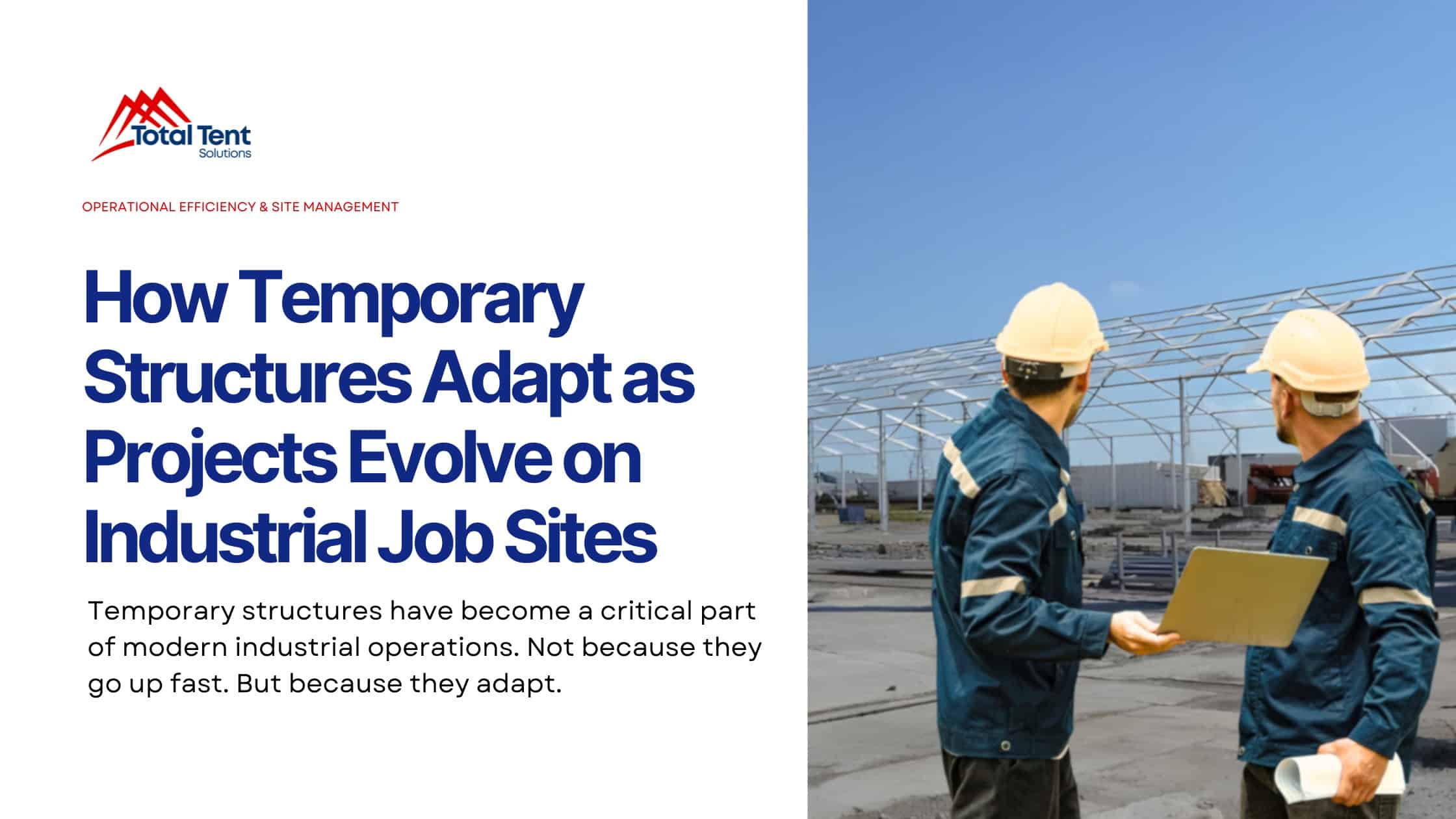
That is why temporary structures have become such a critical part of modern industrial operations.
Not because they go up fast. But because they adapt.
The right temporary structure is not just a place to put people or materials. It is an operational support structure that evolves alongside your project, helping you stay productive, organized, and on track even when conditions change.
Why Industrial Projects Demand Flexible Infrastructure
If you have spent any time on a refinery, petrochemical, or heavy maintenance jobsite, you already know the pattern.
Plans shift. Crew sizes increase. Work scopes expand. Material deliveries stack up faster than expected. And weather never seems to cooperate when you need it to.
Permanent buildings are not designed for this kind of environment. They are fixed, slow to deploy, and difficult to adapt once installed.
Temporary structures solve a different problem. They give you the ability to adjust your jobsite in real time.
Instead of forcing your project to work around rigid infrastructure, you can shape your space around the actual demands of the job.
That is a major advantage when every delay carries real cost.
From Staging to Storage: One Structure, Multiple Roles
One of the biggest advantages of a well-designed temporary structure is how many roles it can play throughout a project lifecycle.
Early in a project, you might need contractor staging, badging areas, and controlled access points.
As the job ramps up, that same footprint may shift into workforce support space with lunch tents, break areas, and climate-controlled zones for plant-ready crews.
Later, as work winds down, the structure can transition again into equipment storage, material consolidation, or warehouse overflow.
It is the same structure, just serving a different purpose. That kind of flexibility is what keeps a jobsite from feeling like it has to reset every time priorities change.
Built for Real Industrial Conditions
Not all temporary structures are created equal.
Industrial buyers are not looking for event tents or light-duty solutions. They need temporary buildings and clear span structures that are engineered to perform in refinery, petrochemical, and manufacturing environments.
That means:
- Engineered to code
- Designed for active industrial workflows
- Built to support contractor staging, maintenance, and turnaround operations
- Compatible with real-world site conditions
It also means working with crews who understand how industrial job sites operate.
Projects in these environments often involve plant access requirements, safety expectations, and coordination with multiple contractors. The structure itself is only part of the equation. Execution matters just as much.
Adapting to Workforce and Scope Changes
Here is something every project manager has experienced. You start with a plan. Then the plan changes. Maybe more trades are added. Maybe a delayed work-front opens up. Maybe the owner pushes for a faster timeline.
Now you need more space. More room for crews. More coverage for tools. More organization for materials.
Temporary structures give you the ability to scale your space without slowing down your project. You can expand workforce support space, increase staging capacity, or reconfigure layouts as needed. And when the job slows down, you are not stuck with a permanent footprint that no longer fits.
That flexibility protects both your schedule and your budget.
Weather, Productivity, and Keeping Work Moving
Weather is one of the most underestimated disruptors on industrial job sites.
Heat drains productivity. Rain slows everything down. Wind creates safety challenges. And when tools and materials are exposed, efficiency drops fast.
Temporary structures create controlled environments inside unpredictable conditions.
They provide:
- Covered contractor staging
- Protected equipment and materials
- Workforce support space that improves working conditions
- Enclosed areas for maintenance and active work
The result is simple: less disruption, more consistency, better output. When crews have a reliable space to work, store materials, and take breaks, the entire project runs smoother.
Speed Is Important. Adaptability Is Critical.
Speed gets a lot of attention in this industry. And yes, temporary structures can be deployed much faster than permanent buildings. But speed alone is not the real advantage. Adaptability is.
The ability to adjust your structure as your project evolves is what keeps operations efficient over time. A fast install helps you get started. A flexible structure helps you finish strong.
When Temporary Structures Make More Sense Than Permanent Construction
There is a time and place for permanent buildings. But many industrial needs are temporary by nature. Turnarounds, maintenance campaigns, contractor staging, and warehouse overflow all have one thing in common: they are tied to a specific project or timeframe. Building permanent infrastructure for a temporary problem often leads to unnecessary cost and underutilized space later.
Temporary structures allow you to meet immediate needs without long-term commitment. You get the space you need, when you need it, without overbuilding for the future. Choosing the Right Partner Matters More Than the Structure
At the end of the day, the structure itself is only part of the solution.
Execution is what makes it work.
You need a partner who understands industrial job sites, not just temporary structures. A team that knows how to support refinery turnarounds, petrochemical maintenance, contractor staging, and workforce logistics. A team that builds structures engineered to code and installs them with real-world jobsite awareness.
Because when your project is evolving in real time, you do not just need a structure.
You need a solution that can keep up.
Conclusion
Industrial job sites are dynamic by nature. The space you need today will not be the space you need next week.
Temporary structures provide the flexibility to adapt as your project evolves, supporting everything from contractor staging and workforce support to equipment storage and operational continuity.
They help you stay organized when things get crowded. They help you stay productive when conditions get tough. And most importantly, they help you stay on schedule when everything else is changing.
FAQs
How do temporary structures actually adjust as a project evolves?
They can be expanded, reduced, or reconfigured depending on your needs. Layouts inside the structure can also change over time, allowing the same space to support staging, break areas, or storage at different phases of the project.
Are temporary structures durable enough for refinery and petrochemical environments?
Yes, when they are designed specifically for industrial use. Engineered clear span structures are built to handle real jobsite conditions and can be configured for weather resistance, workforce support, and protected work areas.
What is the biggest mistake companies make when planning jobsite space?
Overcommitting to a fixed layout too early. Industrial projects change quickly, and rigid planning often leads to inefficiencies. Flexible structures allow you to adapt instead of starting over.
Can temporary structures help reduce downtime during turnarounds?
Absolutely. By providing organized staging, protected work areas, and efficient workforce support space, temporary structures help keep crews productive and reduce delays caused by weather or disorganization.
How do you know if a temporary structure is the right fit for your project?
If your project has a changing scope, fluctuating workforce size, or temporary space needs like staging, storage, or maintenance support, a temporary structure is usually the most efficient and cost-effective solution.