The Challenge of Cold-Weather Operations
When temperatures drop below freezing, productivity often drops with it. For industrial crews, petrochemical sites, and large-scale construction projects, winter weather can bring more than just discomfort. It can halt operations, pose safety hazards, and increase costs. Heated cold weather tents offer a practical solution, but not all tents are created equal. Clearspan tents stand apart as the gold standard for strength, insulation, and flexibility in cold-weather environments.
What Is a Clearspan Tent?
A Clearspan tent is a modular, frame-supported structure with no interior poles or obstructions. The name “clear span” refers to its ability to provide wide, open interior spaces. Built with a heavy-duty aluminum or steel frame and covered in insulated fabric or rigid wall panels, Clearspan tents create durable, weather-resistant environments suitable for both temporary and semi-permanent use.
Why Clearspan Tents Are Ideal for Heated Cold Weather Applications
Clearspan tents are engineered shelters that offer the perfect balance of strength, insulation, and adaptability. Whether used for worker break areas, material storage, or equipment maintenance, they deliver consistent interior comfort even in extreme cold.
Structural Integrity That Stands Up to Winter
Engineered for Snow and Wind Loads
Clearspan frames are engineered to handle substantial snow accumulation and high wind speeds. Their robust truss systems and tensioned fabric roofs distribute weight evenly, preventing sagging or collapse even during heavy storms.
Secure Anchoring Systems
These tents are anchored to withstand wind gusts, ice buildup, and shifting ground. Depending on the surface, whether concrete, asphalt, or soil, ballast blocks, ground anchors, or weighted base plates keep the structure firmly in place.
Insulated Design for Maximum Heat Retention
Thermal Liners and Rigid Wall Options
Clearspan tents can be equipped with insulated liners or rigid wall panels that prevent heat loss. This insulation helps maintain steady interior temperatures and reduces energy costs associated with heating.
Double-Layer Roofing Systems
Some configurations include dual-layer roofing with an air gap for added insulation, helping trap warm air while minimizing condensation. This is crucial for worker comfort and material protection.
Energy Efficiency
With insulation and airtight sealing, less energy is required to heat the space, creating an environmentally and budget-friendly solution for extended operations.
Integrated Heating Systems for Clearspan Tents
HVAC Integration
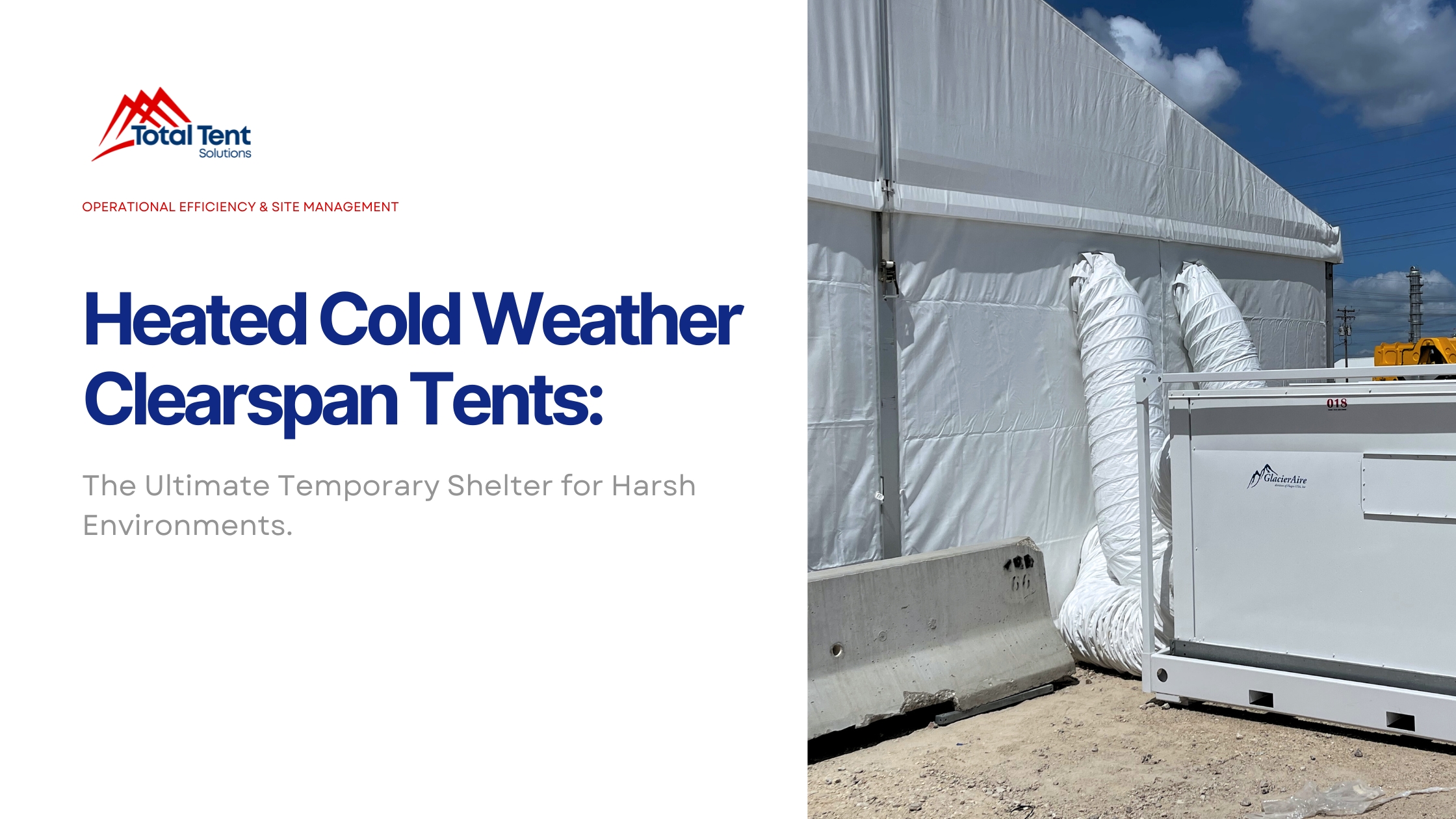
Clearspan tents are fully compatible with commercial-grade HVAC systems that include both heating and air circulation functions. These systems ensure consistent temperature regulation, even across very large floor areas.
Zoned Temperature Control
For bigger setups, multiple heaters can be zoned to different sections of the tent, preventing hot or cold spots. This feature is particularly valuable when using Clearspan tents as large-scale crew rest or lunch facilities.
Safety Comes First in Heated Clearspan Tents
Fire-Resistant Materials
Industrial-grade Clearspan tents use flame-retardant fabrics and materials compliant with NFPA and OSHA standards, providing an extra layer of safety for workers and equipment.
Proper Ventilation and Air Quality
Since heating systems are ducted, fresh air exchange is continuous. This prevents condensation, mold, or CO₂ buildup and ensures a clean breathing environment.
Emergency Access and Lighting
Clearspan tents can be fitted with illuminated exit signage, fire extinguishers, and emergency doors for full compliance with safety regulations.
Applications of Heated Clearspan Tents in Industry
Oil and Gas Turnarounds
In refineries and chemical plants, downtime is costly. Clearspan tents serve as temporary heated shelters for crew meetings, breaks, and equipment storage during winter turnarounds, ensuring projects stay on schedule.
Construction and Infrastructure Projects
Bridge repairs, roadwork, and utility projects continue year-round. Heated Clearspan tents provide shelter from snow, wind, and ice, allowing crews to maintain productivity safely.
Manufacturing and Fabrication Sites
Temporary enclosures can protect fabrication materials and machinery from freezing temperatures, preventing damage and maintaining consistent workflow.
Emergency and Disaster Response
When rapid deployment is critical, Clearspan tents can be installed within hours to serve as command centers, warming shelters, or field hospitals.
Advantages Over Other Tent Types
No Interior Poles or Obstructions
Unlike frame or pole tents, Clearspan structures offer completely open floor space, ideal for industrial equipment, dining tables, or assembly work areas.
Higher Load Capacity
The engineered design allows for suspended lighting, HVAC ducts, and even small cranes or ventilation systems to be safely mounted to the frame.
Long-Term Durability
With proper maintenance, Clearspan structures can last for years, far exceeding the lifespan of traditional fabric tents.
Year-Round Adaptability
Because of their modular design, the same Clearspan structure can be used year-round, with heating in winter and cooling in summer simply by adjusting HVAC systems.
Customization Options for Heated Clearspan Tents
Insulated Flooring Systems
Raised, insulated flooring keeps workers off frozen ground while preventing heat loss through the floor. This adds both comfort and energy efficiency.
Heavy-Duty Doors and Entry Systems
Clearspan tents can include roll-up or double-door entries that maintain interior temperature while allowing easy equipment access.
Lighting and Power Distribution
Integrated LED lighting, power panels, and outlets create a well-lit and functional environment suitable for extended use.
Partition Walls and Interior Layouts
Need separate sections for dining, storage, and safety meetings? Clearspan interiors can be divided with insulated partition walls.
Deployment Speed and Flexibility
One of the greatest advantages of Clearspan tents is how quickly they can be set up compared to permanent structures. Depending on the size, most can be installed in one to three days with minimal disruption to ongoing site activities. When the project moves or the season changes, the tent can be dismantled, transported, and reassembled at a new location, making it a reusable asset instead of a one-time expense.
Cost and ROI Considerations
Lower Upfront Investment Than Permanent Buildings
Constructing a permanent building for short-term winter work rarely makes financial sense. A Clearspan tent offers comparable performance at a fraction of the cost.
Energy Savings Through Efficient Insulation
Because Clearspan tents retain heat efficiently, heating systems operate less frequently, reducing energy consumption and fuel costs.
Long-Term Reusability
Clearspan structures can be reused season after season. For companies managing multiple sites, owning one or two modular systems can dramatically cut costs over time.
Best Practices for Setting Up Heated Clearspan Tents
Proper Site Preparation
Before installation, the ground should be leveled and cleared of debris. Gravel, concrete, or compacted soil surfaces are ideal for anchoring and drainage.
Anchoring and Snow Load Planning
Heavier snow regions require additional anchoring and snow-shedding considerations. Clearspan tents can be fitted with roof pitches and gutter systems to prevent buildup.
Routine Maintenance and Safety Checks
Daily checks of heating ducts, electrical systems, and fabric tensioning help maintain efficiency and extend the tent’s lifespan.
Why Clearspan Tents Outperform Traditional Temporary Structures
Clearspan tents bridge the gap between flexibility and permanence. They provide the strength of a warehouse, the mobility of a tent, and the comfort of a climate-controlled facility. Unlike trailers or modular buildings, they scale easily for any project size, from a 1,000-square-foot break area to a 20,000-square-foot maintenance enclosure.
Their modularity also means they can grow with your needs. Add-on bays, end walls, or side extensions can transform a single tent into a full operations hub without costly new construction.
Partnering with the Right Clearspan Provider
Not every tent supplier understands industrial environments. Choosing a partner with experience in cold-weather Clearspan installations ensures the structure is engineered, installed, and heated correctly. Look for providers offering:
- Turnkey setup, including heating, lighting, and flooring
- 24/7 service support throughout your project
- Safety certifications and compliance documentation
- Rental or purchase options tailored to your timeline
A reputable provider ensures your heated Clearspan structure is not only functional but fully compliant and reliable.
Conclusion: Clearspan Tents Are the Smart Choice for Winter Work
When winter weather threatens productivity, Clearspan tents deliver unmatched reliability and protection. They offer all the benefits of a permanent building without the time, cost, or rigidity. Their superior strength, insulation, and custom heating systems make them the leading choice for industrial projects that demand year-round performance.
From refinery turnarounds to construction staging, a heated Clearspan tent transforms harsh conditions into safe, comfortable, and efficient work environments. They keep your crews warm, your projects on track, and your operations running smoothly no matter the forecast.
FAQs About Heated Clearspan Tents
1. Can Clearspan tents withstand heavy snow and high winds?
Yes. They are engineered for substantial snow loads and wind resistance, meeting or exceeding industrial safety standards.
2. How long does it take to install a Clearspan tent?
Depending on the size and site conditions, installation typically takes between one and three days.
3. Are Clearspan tents suitable for long-term use?
Absolutely. With proper maintenance, they can remain in place for years, functioning as semi-permanent structures.
4. Can Clearspan tents be used year-round?
Yes. They can be heated in winter and cooled in summer, making them a versatile solution for all seasons.
5. What industries benefit most from heated Clearspan tents?
Oil and gas, construction, utilities, logistics, and emergency response sectors rely heavily on Clearspan tents for cold-weather safety and productivity.